How many wedding invitations do you need?
Almost everyone orders too many of one thing and too few of another, because each piece of stationery is counted differently. Invitations go by household, menus by place setting, and orders of service somewhere in between.
Count households, not guests
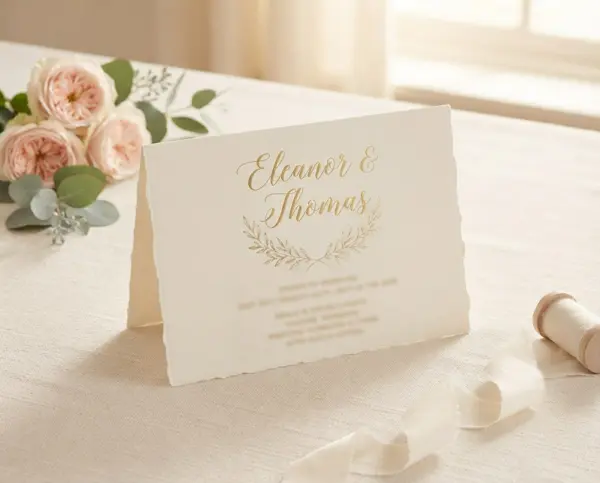
The single most common mistake is ordering one invitation per guest. Couples and families living at the same address receive one invitation between them, so the number of Wedding Invitations is always well below the guest count.
For 120 guests, most couples end up ordering between 60 and 80 invitations. The exact figure depends on how many of your guests are single and how many children are being invited on their parents' invitation.
Always add spares
Ten or so spares is usual. They cover late additions, one lost in the post, one kept for the album, and one for each set of parents.
The reason to order them at the start rather than later is cost: a short reprint of ten cards costs far more per card than including them in the original run, because most of the price is in setting up rather than in the paper.
The rest of the suite counts differently
RSVP Cards match the invitation count, since one goes inside each invitation.
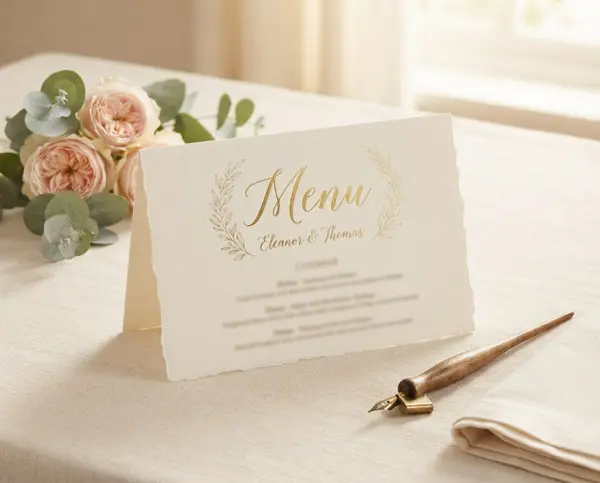
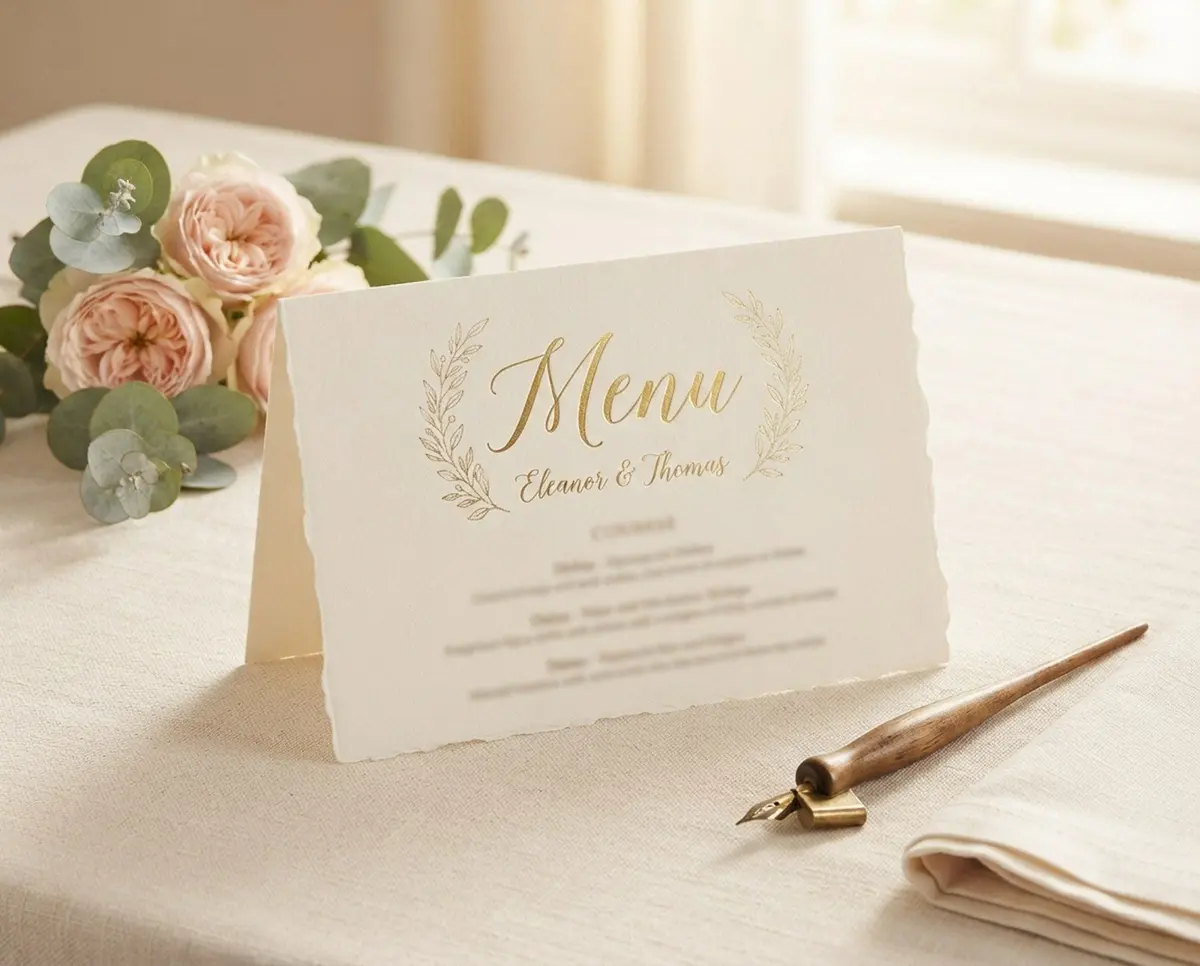
Menu cards are counted per place setting, or one between two if you are sharing, so they follow the guest count rather than the household count.
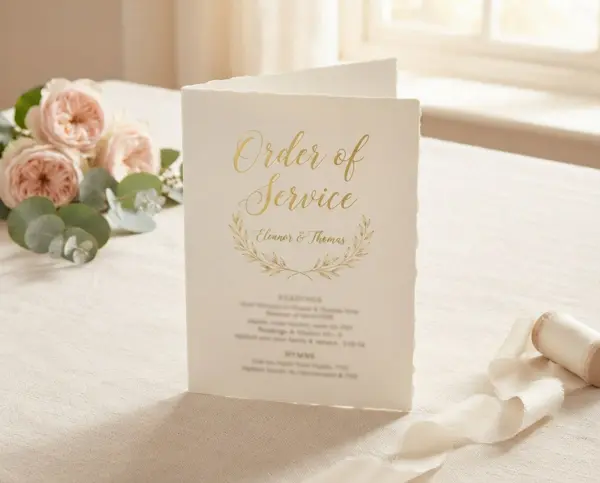
Order of service is usually one between two where guests share a pew, so roughly half the guest count, though some couples order one each.
Place cards are one per seated guest, counted from the seating plan, and the Table Plan is a single item however many guests you have.
A worked example for 120 guests
Invitations: 70, plus 10 spares.
RSVP cards: 80, matching the invitations.
Order of service: 70, allowing for sharing plus spares.
Menu cards: 120 for one each, or 60 sharing between two.
Table plan: 1.
Thank you cards: 80, counted by gift rather than by guest, which usually lands near the invitation number.
What changes the numbers
A guest list with many single friends pushes the invitation count up, because fewer people share an address. One with many couples and families pushes it down.
Children are normally included on their parents' invitation rather than sent their own, unless they are old enough to have moved out.
Where you are inviting some guests to the evening only, they usually receive their own invitation, which is counted separately from the day guests.