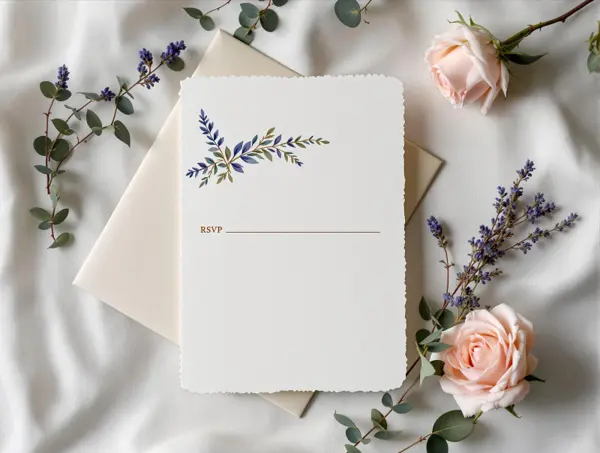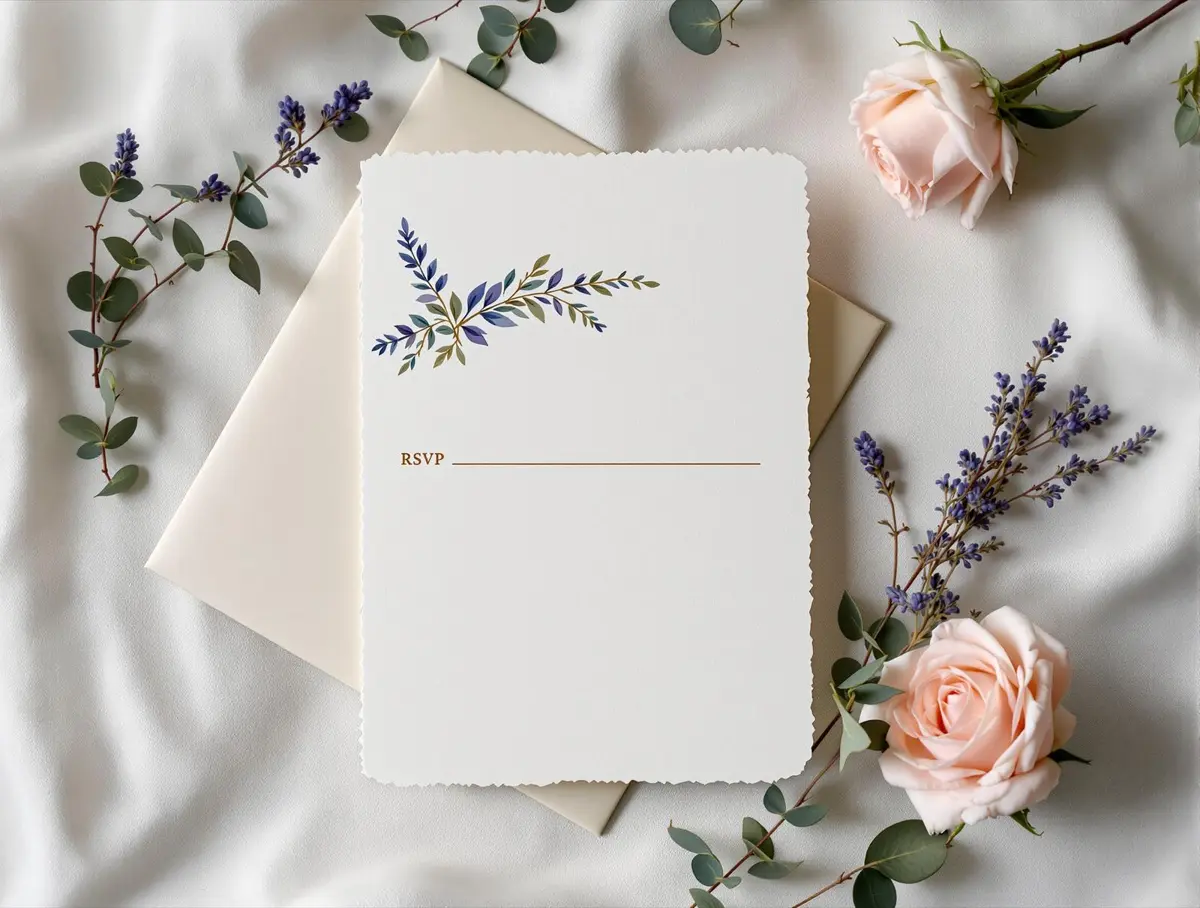
RSVP cards: wording, reply dates and how they work
An RSVP card is the small card enclosed with a wedding invitation that guests fill in and return, so the couple can count heads without chasing. It needs four things: a reply-by date, a line for names, the accept/decline choice, and anything you must know in advance — usually dietary requirements. Set the reply-by date three to four weeks before the wedding, when caterers want final numbers.
What should an RSVP card say?
The classic layout is five short lines: "Kindly reply by 12th June" · a line beginning M___ (where guests write Mr, Mrs, Ms and their names) · "accepts with pleasure / declines with regret" · "dietary requirements" · and, if numbers are tight, "we have reserved __ seats in your honour", which gently caps plus-ones. Less formal versions say the same in plain words: "Can't wait / Can't come".
How do you choose the reply-by date?
Work backwards: your caterer wants final numbers two to three weeks out, and you want a week for chasing stragglers — so set the reply-by date three to four weeks before the day. The card's date is doing the planning for you; the prettiness is a bonus.
Post back, or reply online?
The posted card is the tradition and still gets the best response from older guests; a wedding website address printed on the card suits the rest. Many couples run both — the card carries the website for those who prefer it, and either route lands the answer. If cards come back by post, pre-address the envelopes and guests only need a stamp.
Sizes, papers, quantities
RSVP cards are usually one size down from the invitation — A6 beside an A5 invitation sits perfectly — and are printed in the UK on the same premium papers, checked by hand, so the suite matches. All five sizes are available with matching envelopes. Prices start at £24 for 50; order one per household plus a few spares.