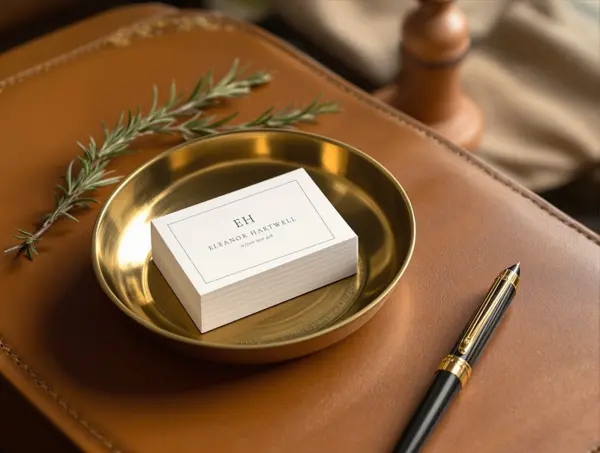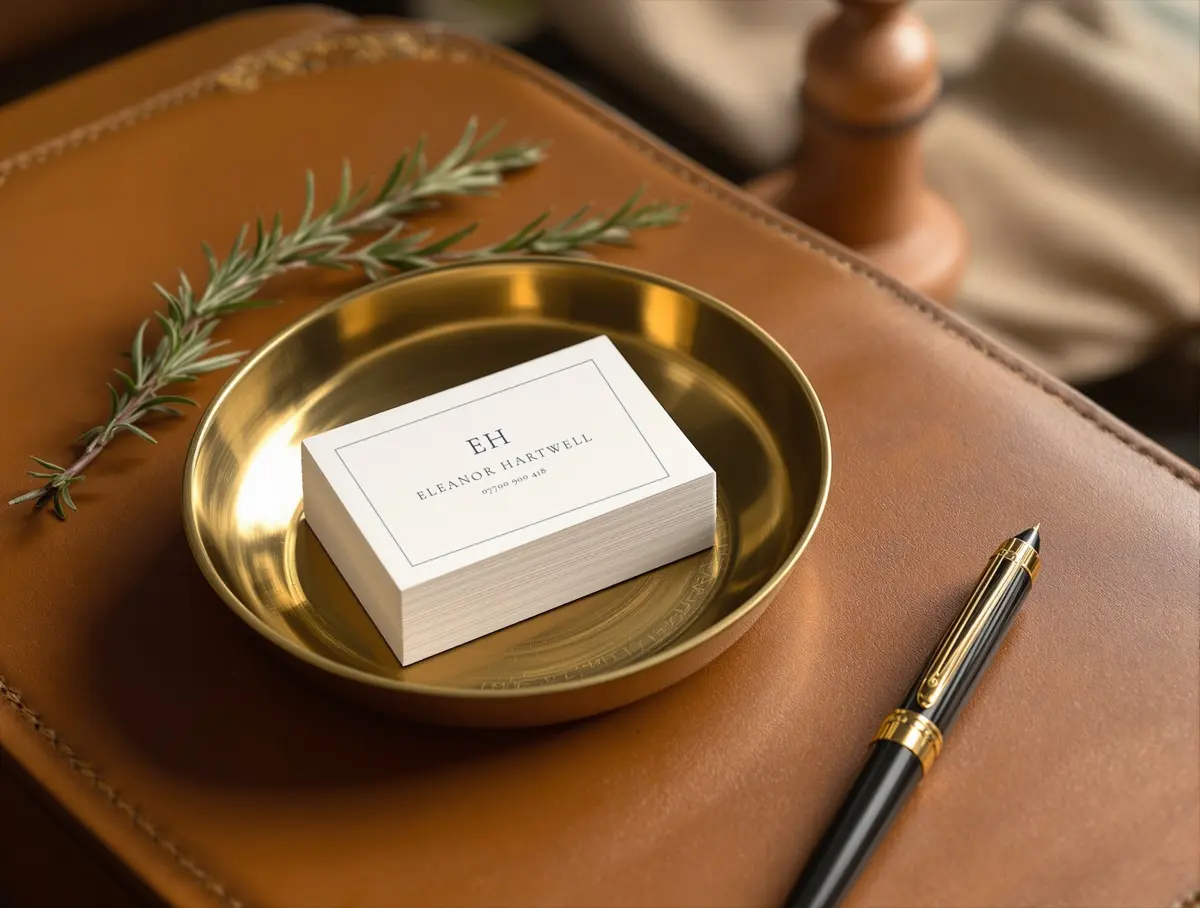
What is a calling card? (And why they are back)
A calling card is a small personal card — 85 × 55mm, the same size as a business card — carrying your name and the way to reach you, and nothing about your job. It exists for the moments a business card is wrong and typing your number into a stranger's phone feels graceless: the dinner party, the dog walk, the person you'd genuinely like to see again.
What goes on a calling card?
Less than you think: your name, set well, and one or two ways to reach you — a mobile, an email, perhaps a city. No job title, no logo, no QR code apologising for itself. The restraint is the statement; whitespace is doing the talking.
Calling card or business card?
A business card represents your employer; a calling card represents you. The couple who socialise together put both names on one card. The freelancer who hates networking carries the calling card and watches it start better conversations than the corporate one ever did.
A short history, since you'll be asked
Calling cards ruled polite society from the 18th century — left on silver trays in hallways, governed by elaborate rules about corners turned down. The smartphone killed the address book, and the calling card has returned as the analogue flourish: handing someone a beautiful card is now rarer, and therefore more memorable, than it was in 1890.
Paper is the whole product
A card this small is judged entirely by hand-feel, so the stock matters: ours print in the UK on premium heavyweight papers, four of them Italian, and every order is checked by hand. From £24 for 100 — designed once, handed out for a year.