Moving cards: when to send them and what to write
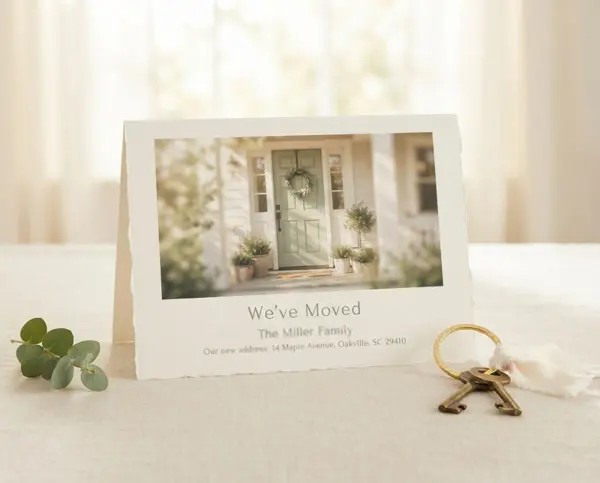
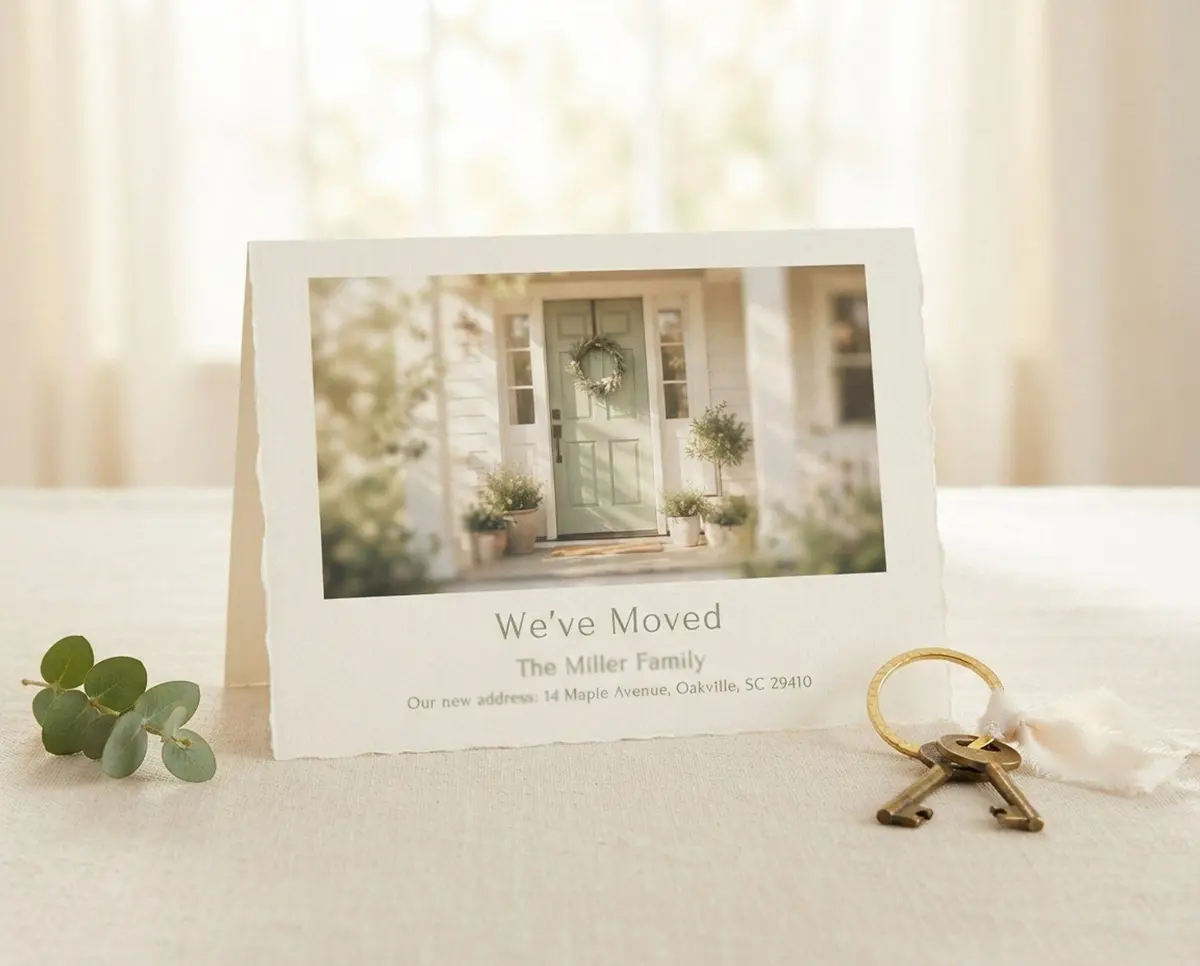
A moving card — also called a change-of-address card — is a printed card that tells the people in your life you have moved and gives them your new address. The best time to send one is within the first month of moving in: soon enough that post and Christmas cards follow you, settled enough that you are sure of every detail. Unlike a text, a card puts your new address somewhere people can actually keep.
When should you send moving cards?
Within two to four weeks of moving in is the sweet spot. You can order the cards as soon as your completion or move-in date is confirmed, so they are ready to post in the first week. If you have your post redirected, send the cards well before the redirection runs out — the card is what replaces it.
What do you write on a moving card?
Four things cover it: your names, the new address written out in full, the date you moved (or simply the words we have moved), and whether your phone numbers have changed. A short line sets the tone — "We have moved. Same us, new address." for a light touch, or "Please note our new address from 1st March" for something plainer. If you would welcome visitors, say so.
Who should get one?
Think in households, not people: family, close friends, and anyone who writes to you — plus a few for the practical list, like clubs and societies that still post things. Most people find ten to thirty covers it, and ordering a handful of spares costs far less than a second small order later.
What size and paper work best?
A6 — standard postcard size — is the classic choice and the easiest to post; A5, DL and two square sizes are also available. Moving cards are printed in the UK on premium papers and checked by hand before printing, with matching envelopes available. Prices start at £24 for 10 cards, and you order exactly the number you need — there is no minimum.